Understanding AI Illustration Generators
In the ever-evolving world of digital art, AI illustration generators have emerged as game-changers, enabling both amateur and professional artists to create stunning visuals in moments. These tools harness the power of artificial intelligence to transform simple text prompts into intricate illustrations, making art creation accessible to all, regardless of skill level. But how exactly do these generators work, and what implications do they hold for the future of art? In this comprehensive guide, we will explore how to use an AI illustration generator, uncover their potential, and provide practical insights for artists and designers alike.
What is an AI Illustration Generator?
An AI illustration generator is a software tool that uses advanced algorithms and neural networks to create illustrations based on textual descriptions or prompts provided by the user. By leveraging vast datasets of existing art and imagery, these generators can produce a wide variety of styles, ranging from realistic to abstract art. Some popular examples include DALL-E, Midjourney, and Stable Diffusion, each with unique features and capabilities tailored to different artistic needs.
How AI Transforms Digital Art Creation
The key benefit of AI illustration generators lies in their ability to streamline the creative process. Traditional illustration can be time-consuming, requiring hours of sketching, refining, and finalizing work. With AI tools, artists can quickly visualize their ideas, iterate on designs, and produce high-quality images in a fraction of the time. This democratization of art creation not only enhances productivity but also inspires creativity, allowing artists to experiment without the fear of failure.
Overview of Popular AI Illustration Tools
There is a diverse range of AI illustration tools available currently, each offering different functionalities and approaches. Some of the most popular options include:
- DALL-E: Known for its ability to generate detailed images from imaginative prompts, DALL-E allows users to create unique artworks that blend concepts in unexpected ways.
- Midjourney: This platform is celebrated for its community-driven approach, enabling users to share and collaborate on artworks, enhancing the creative process.
- Artbreeder: Users can combine multiple images and adjust parameters such as style and color to create new, unique visuals, harnessing collaborative inhalation and genetic algorithms.
Getting Started with AI Illustration Generators
Choosing the Right Tool for Your Needs
With a plethora of AI illustration generators available, selecting the right one can be daunting. Consider what you want to achieve with your illustrations—be it high realism, abstract styles, or specific subject matter—and choose a tool that specializes in those areas. Additionally, examine user reviews and demonstrations to gauge how intuitive and effective the tool is in practice.
Setting Up Your Creative Workspace
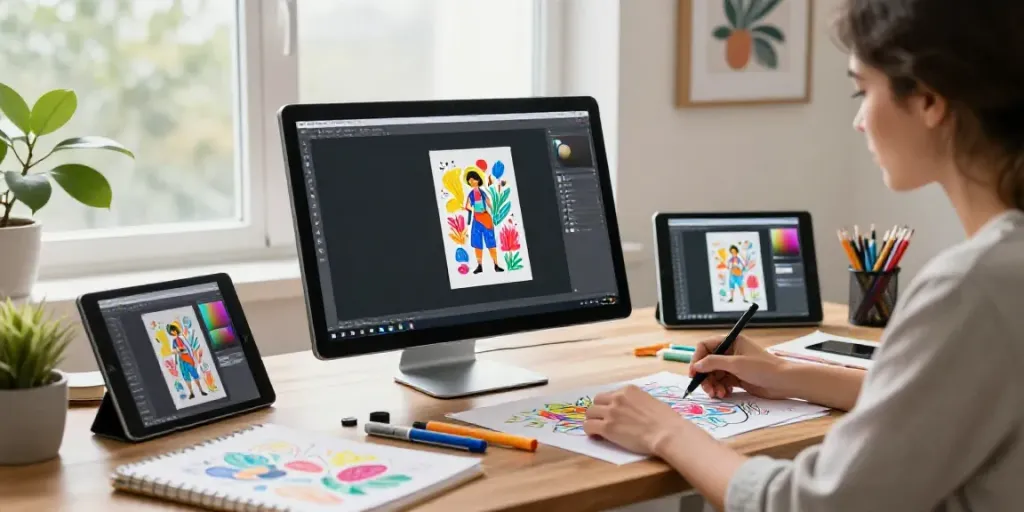
Creating a conducive environment for your digital art is crucial. Ensure your workspace is equipped with a reliable computer, high-resolution monitor, and the necessary software. It's also beneficial to have a sketchpad nearby for drafting ideas before inputting them into the AI generator. A comfortable and distraction-free setting can foster creativity and enhance your overall productivity.
Integrating AI Tools into Your Workflow
Integrating AI illustration generators into your creative workflow can drastically enhance your artistic capabilities. Start by using these tools for initial concept generation—the AI can provide multiple variations based on your input, which you can then refine or adapt in your preferred design software. This hybrid approach combines the efficiency of AI with your unique style, leading to a more dynamic artistic output.
Techniques for Effective Use
Crafting Effective Prompts for AI
The quality of the illustrations generated by AI largely depends on the prompts provided. Be specific and descriptive in your prompts, including details such as color schemes, styles, and specific elements you want in the artwork. Experiment with different phrasing and complexities to see what yields the best results, allowing you to fine-tune your requests based on the AI’s responses.
Combining Traditional and AI Methods
While AI tools are powerful, they can complement, rather than replace, traditional artistic methods. Utilize your artistic skills to develop concepts that the AI can turn into illustrations, or create backgrounds with traditional media to merge with AI-generated foreground elements. This combination can lead to unique pieces that showcase both your artistic vision and the innovative capabilities of AI.
Best Practices for Quality Results
To ensure the highest quality results from AI illustration generators, consider the following best practices:
- Refine Your Inputs: Don't hesitate to iterate on your prompts; small changes can yield significantly different outcomes.
- Use Multiple Generators: Different generators have varying strengths; using multiple tools can help you find the perfect fit for specific styles or needs.
- Stay Current: Follow updates and community forums related to your chosen tools to learn about new features, tips, and successful case studies.
Case Studies and Applications
Success Stories of Artists Using AI
Numerous artists have successfully incorporated AI illustration generators into their workflows. For instance, a graphic designer might use Midjourney to create stunning promotional posters quickly, while a children’s author could generate whimsical illustrations for their books using DALL-E. These stories illustrate the potential of AI not just as a tool, but as a partner in the creative process.
Real-World Applications in Marketing and Design
In the marketing sector, businesses leverage AI-generated art to create unique visuals for advertisements, social media content, and branding materials. The speed and cost-effectiveness of AI tools allow for rapid prototyping and iteration, significantly accelerating campaign development. Companies successfully utilizing these technologies report a competitive edge in engaging their target audiences with fresh, eye-catching designs.
Innovative Projects Leveraging AI Art
Innovators in the tech and art worlds have embarked on groundbreaking projects that harness AI illustration generators. For example, interactive art installations that evolve based on audience input can generate a real-time visual experience, captivating viewers in new and exciting ways. Such projects not only redefine the boundaries of art but also explore new realms of audience interaction and engagement.
The Future of AI Illustration
Trends in AI Illustration for 2026 and Beyond
As we look ahead to 2026, several trends are emerging in the realm of AI illustration. The development of multi-modal AI—integrating text, image, and sound—will likely lead to a more immersive creative experience, allowing artists to create multimedia works. Additionally, we can expect to see advancements in personalization features, enabling the AI to learn an individual artist’s style over time.
Challenges and Ethical Considerations
While the benefits of AI illustration generators are significant, challenges remain regarding copyright and ethical use. As AI becomes more prevalent in creative industries, it will be essential to navigate issues of originality and ownership carefully. Artists must be vigilant in ensuring their work is not compromised or misrepresented in AI-generated outputs.
Preparing for Technological Advancements
As technology evolves, artists and designers must adapt to stay ahead. Continuous learning through workshops, online courses, and community engagement will be vital in understanding the capabilities of emerging AI tools. By integrating these advancements into their processes, artists can maintain their relevance and harness the full potential of AI in illustrating their visions.
How to use an AI illustration generator effectively?
To use an AI illustration generator effectively, focus on crafting detailed prompts, experimenting with different AI tools, and combining AI outputs with traditional artistic methods. Embrace the iterative nature of AI and let it enhance your artistic process, rather than replacing it.
What are the best free AI illustration generators available?
Among the best free AI illustration generators are tools like Canva’s AI Art Generator, which allows you to generate images from text prompts, and Monica’s AI Generator, known for its user-friendly interface and high-quality outputs. Explore different tools to find the one that fits your specific artistic needs.
Can traditional artists benefit from AI tools?
Absolutely! Traditional artists can significantly benefit from AI tools by using them to generate ideas, create backgrounds, or enhance their traditional work. These tools can serve as inspiration, helping artists break through creative blocks and explore new styles and techniques.
What are the common mistakes when using AI illustration generators?
Common mistakes include vague prompts, over-reliance on AI outputs, and failing to iterate on designs. Artists should remember that AI is a tool to aid creativity, not a replacement for it. Being specific with prompts and viewing AI as a collaborative partner will yield the best results.
How will AI tools shape the future of art and design?
AI tools are poised to transform art and design by enabling faster, more versatile, and more collaborative creative processes. As these technologies continue to develop, they will push the boundaries of what's possible in art, allowing for unprecedented experimentation and innovation.